
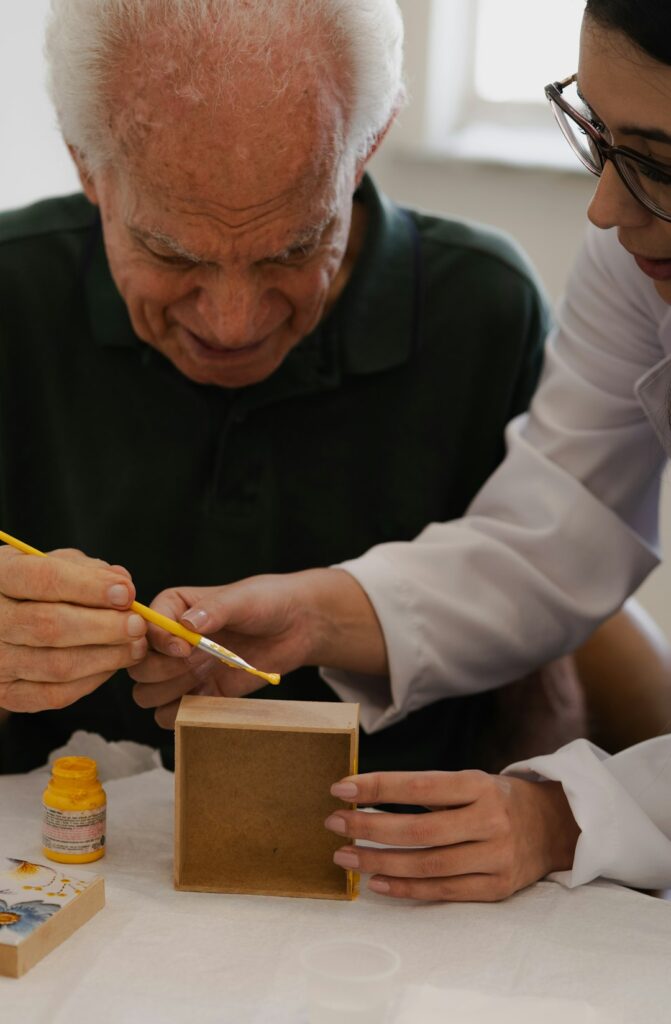
Creative hobbies can give assisted living residents meaningful ways to use their time, express preferences, connect with others, and maintain familiar routines. Activities do not need to be complicated or physically demanding to be enjoyable. The most successful hobbies are usually adaptable, easy to begin, and connected to a person’s interests or life experiences.
What creative hobbies work well in assisted living?
The best choices are activities that can be completed while seated, adjusted for different abilities, and enjoyed alone or with a small group. Creative hobbies may include art, music, writing, crafts, gardening, cooking-related projects, and memory-based activities.
A hobby should feel like an invitation rather than an obligation. Some residents may prefer quiet, independent projects, while others may enjoy conversation and teamwork. Offering several options allows each person to choose an activity that matches energy level, vision, dexterity, and mood.
Helpful choices include:
- Watercolor painting with large-handled brushes
- Simple drawing, coloring, or collage projects
- Knitting, crochet, or large-piece needlework
- Seasonal wreaths or table decorations
- Handwritten letters, journaling, or family-history writing
- Singing, rhythm instruments, or music listening groups
- Container gardening and arranging flowers
- Decorating cookies or assembling simple no-bake recipes
- Photography, picture sorting, or scrapbook making
- Puzzles, model building, and other hands-on projects
How can art activities be adapted for older adults?
Art activities become more accessible when supplies are easy to see, comfortable to hold, and simple to organize. Large crayons, broad markers, thick paintbrushes, nonslip mats, and lightweight materials can help residents with arthritis, tremors, or reduced hand strength.
Projects do not need to produce a perfect result. Painting colors onto textured paper, making abstract designs, or creating seasonal collages can be satisfying without requiring advanced skill. Templates and stencils may help residents who feel uncertain about drawing.
For people with vision changes, use strong contrast between the work surface and the materials. A dark mat under light-colored paper, larger print instructions, and good lighting may make participation easier. Glare should be reduced, especially for residents who are sensitive to bright or reflective surfaces.
Art can also support social connection. A small group might create a shared mural, decorate cards for family members, or assemble a display based on the seasons. Residents who do not want to make art themselves may still enjoy choosing colors, telling stories about an image, or observing others.
Are music and singing useful creative hobbies?
Music can be meaningful even when a resident does not play an instrument or remember every word. Singing familiar songs, tapping along to a steady rhythm, or listening to music connected to important life periods can encourage participation and conversation.
Simple instruments may include shakers, hand drums, bells, or rhythm sticks. These can be used while seated and do not require musical training. A resident who prefers not to perform may choose songs, help keep time, or talk about memories associated with a particular style of music.
Volume should be considered carefully. Some residents may find loud or unpredictable sounds uncomfortable. Short sessions, familiar selections, and the option to step away can make music activities more welcoming.
Music may also provide a bridge to other hobbies. Residents can decorate small music-themed cards, write down favorite songs, or create a shared list of meaningful musical memories.
What writing and memory-based activities can residents try?
Writing projects can preserve personal history while giving residents a manageable creative outlet. A person does not need to write a complete memoir. Short prompts are often easier and more engaging.
Useful prompts include:
- A favorite childhood meal
- A job or skill that shaped daily life
- A memorable family tradition
- A place that felt peaceful
- A lesson learned from a parent or grandparent
- A favorite season and the activities associated with it
- An object kept for sentimental reasons
Residents may dictate their answers if writing is tiring. A staff member, family member, or volunteer can record the words without changing the speaker’s style. The finished pages can remain private, be shared with relatives, or become part of a personal keepsake binder.

Picture sorting and scrapbook activities can serve a similar purpose. Residents might organize photographs by decade, label people and places, or select images for a family album. Care should be taken not to assume that every memory activity is pleasant. Prompts should remain optional, and residents should be free to skip subjects that bring sadness or discomfort.
How can gardening be done indoors or in limited space?
Gardening can be adapted to a windowsill, balcony, patio, activity room, or small tabletop. Container gardening is often more practical than full-size outdoor gardening because it reduces bending, walking, and heavy lifting.
Residents may plant herbs, succulents, flowering plants, or easy-care vegetables in lightweight containers. Gardening tasks can be divided so that each person chooses a comfortable role:
- Scooping soil into containers
- Selecting seeds or plants
- Labeling pots
- Watering with a small cup
- Removing dry leaves
- Arranging cut flowers
- Observing growth and recording changes
Seasonal conditions in Franklin can make indoor gardening especially useful during cold weather or periods of rain. A bright indoor location, safe flooring, and spill-resistant containers can help reduce hazards. Plants should be checked for possible allergies, toxicity, and care requirements before being brought into shared spaces.
What crafts are suitable for residents with limited dexterity?
Crafts are more enjoyable when they do not depend on precise finger movements. Large pieces, pre-cut materials, adhesive options, and step-by-step examples can make projects easier to manage.
Good possibilities include paper weaving with wide strips, foam-shape collages, decorating premade cards, assembling large-piece puzzles, and making simple fabric or ribbon arrangements. Residents who enjoy knitting or crochet may prefer larger needles and thicker yarn, while others may participate by selecting colors or winding yarn.
Avoid making speed the goal. Allowing extra time, offering rest periods, and accepting unfinished projects can protect the sense of accomplishment. If a tool causes pain or frustration, the activity can be modified rather than abandoned.
How should hobbies be adjusted for memory loss?
Residents living with memory loss can often enjoy creative activities when instructions are brief, materials are familiar, and the process is more important than the final product. Demonstrating one step at a time may work better than giving several instructions at once.
Repeating a familiar activity can be comforting. Folding fabric, arranging flowers, coloring, sorting large buttons by color, or singing a known song may provide structure without requiring new learning.
Avoid correcting every mistake. If a resident places materials in an unexpected way, the result may still be meaningful. Gentle encouragement and simple choices—such as selecting between two colors—can support independence without creating pressure.
How can families support a resident’s creative interests?
Families can help by sharing information about past hobbies, favorite music, artistic preferences, and activities the resident disliked. Useful supplies may include family photographs, fabric scraps, handwritten recipes, gardening memories, or copies of familiar stories.
The goal is not to recreate a former hobby exactly. A person who once maintained a large garden may now prefer arranging flowers. Someone who used to sew may enjoy choosing fabrics or sorting buttons. Adapting the activity preserves the interest while respecting current abilities.
Creative hobbies are most useful when they remain flexible. A resident may want a social project one day and a quiet activity the next. In assisted living, offering choice, pacing activities carefully, and recognizing personal history can make ordinary materials feel purposeful and familiar.
